Tuesday, November 29, 2005

Christmas vs xmas.


‘Tis the season to be jolly, and already the jolly soldiers in the annual holiday war are falling into jolly ranks and files, their jolly muskets and computers cleaned and ready to fire this year's first jolly shot, both those of lead and those of electrons.

Christmastime brings out the warrior in all of us.

On one side (probably wearing red trunks) are the Hyperreligious.

On the other side, (probably wearing green trunks) are the rest of us. And we, the "rest" are violating one of the main rules of military engagement. We are fighting a war on two fronts.

Front One: the normal holiday hustle. Traffic. INTENSE traffic. Mall crowds. Busy shopping websites. Bills. Clamoring kids or grandkids.

Front Two: atop this, the red trunks are pounding us.

The reds have it easier. They KNOW the True Meaning of Christmas. And in true holiday spirit, they're giving us hell for our heathen ways.

We're just ordinary schlubs trying to bring a little material holiday cheer to others.

How heathen!

But it's not for nothing that our trunks are the color of money. We're working on "greeniing" the guns instead of putting on that gunmetal bluing.

But, of course, the reds have their right to try to beat us up for our materialistic ways.

The early history of the holiday is buried in pagan rites and date-keeping. THAT seems not to bother anyone.

But no one is keeping a REAL gun at their heads and demanding that they refrain from celebrating the neo overlay they've put on December 25th.

So how about a compromise. Two holidays. Christmas for Them, xmas (you don't even have to capitalize the word) for us.

They can sing carols, erect manger scenes, go to church and worship.

We can sing "Rudolph," erect gift stacks, go to Macy's and shop.

We don't have to talk to each other. We don't even have to SEE each other.

Well... Maybe that's extreme. Sometimes we'll probably have to ride the same subways or buses.

In which case, there may be typical mass transit battles of the boom boxes.

"O, Come All Ye Faithful" vs. "Rockin' Around The xmas (notice, still no capital 'x') Tree."

Or maybe battles of the iPods, during which all you will hear is "tshh TSHH, tshh TSHH, tshh TSHH," Which may be even MORE annoying.

Other than that, we can pretty well ignore each other.

In fact, we can celebrate on two separate days, if that’ll make the reddies happy.

They like 12/25… and because they are so giving, a big chunk of 12/24 as well.

So how about either 12/23 or 12/26. Are you fussy?

Okay, so you’re fussy. But are you THAT fussy?

And Now, because today’s Wessay is shorter than usual, here’s a question:

Why would an orthopedist demand the co-payment before seeing you? Is it because he believes his power to cure is so great that you’ll be able to run out of the office afterward?

I'm Wes Richards. My opinions are my own, but you're welcome to them.™

©wjr 2005

Monday, November 28, 2005

Went Shopping, Went Missing, Went Dead.

“Went missing.” Where did we get this imbecile phrase?

The Alabama teen that disappeared during a school trip in the Islands “went missing,” at least according to news accounts and the cops.

Judge Crater didn’t “went missing,” he vanished.

So have hundreds of thousands of other people over time.

But now, people don’t vanish, disappear, get kidnapped, abducted or captured.

They “go missing.”

Like someone went shopping. Or went out to eat. Or went to bed.

Well, if we’re going to use this construction, let’s really USE it.

A guy got pushed off a subway platform in New York the other day, was struck by a train and… and… what? Died? But not before parts of him went missing. They were later found below the tracks. So, the parts “went found.”

But did the guy die, or was it that he “went dead.” Like a telephone line without a dial tone or a cable TV box when you don’t pay the bill. (or when you do, but the cable company’s transmission “went ka-flooey.”

It’s politically incorrect, but historically common to say someone who lost his mind “went nuts.”

I guy loses control of his car and hits a tree. Earlier that evening, he “went drunk.”

The woman “went pregnant.”

Mere semantics, you say?

Semantics, yes. “Mere” semantics, no.

Words represent concepts.

Regular readers/listeners to these rants know that. Or at least this space has “went conceptual” more than once.

So what is the concept we’re examining when someone “went missing?”

Why it’s this: the person bears no responsibility for the action. Something happened over which the person who “went” had no control.

The Alabama teen had no say in her disappearance. Or did she? At this writing, we don’t know. She may have willingly gone along with her captor or captors. Or not.

The guy who “went drunk” HAD control over his situation, at least until the third martini.

The guy on the subway platform did not. And his limbs and other assorted parts CERTAINLY did not.

So, “went missing” leaves the (not so clear) implication that the person had nothing to do with what happened to him.

The cop who was shot in the line of duty yesterday (11/27/05) went dead after doctors failed to save his life.

But saying it that way sounds… well… imbecilic.

Now.

But not for long.

Once one of these phrases gets into the language, it tends to stick and expand.

How many times have you heard the relatively recent “at the end of the day….”?

It might have been good usage the first time or even the first thousand times, when applied to something that actually happened at the end of a day.

But now, it’s EVERYWHERE.

Soon, the word “went” will be applied to all kinds of things we’re not used to hearing. And by this time next year, we’ll accept it as part of the language.

This essay has “went done.”

I'm Wes Richards. My opinions are my own, but you're welcome to them.™

©wjr 2005

Thursday, November 24, 2005

Seattle-ism

(Advance for Saturday, 11/26/05)


Washington State’s export binge seems to have slowed a bit. The key word is “seems.” It really hasn’t. It’s growing underground with expansions and the insinuation of this social movement into other areas.

Seattle is a lovely city, so ‘tis said. But maybe it’s time to look a little closer.

Here in New York, we have been infiltrated by two major Seattleists: Starbucks, the coffee monolith and Washington Mutual, the financial wannabe-monolith.

Fine boys and girls, all.

But different.

Not from each other, but from everything else around here.

Not BAD different.

Just different.

For a time, Starbucks expanded geometrically. Multiplied like the brooms in “The Sorcerer’s Apprentice.” Chop ‘em in half, and you get two active brooms instead of just one. Or like worms. Cut ‘em in half and you get two living worms.

In fact, it appears the goal was (if it isn’t still) The Starbucks Mirror Window Experience. That’s when you look out the window of any given Starbucks and see… another Starbucks.

It’s not a bad place. The brownies are a little cement-y. The plain coffee is a tad French (read “burned”) But there are so many add-ons you can cover the burn with any flavor you like. And when you dunk the cement-y brownie, it becomes, well, moist and chewy.

There are lines. Oh, what lines. That’s because walking into one of these places turns even the most decisive and regular customer into a puddle of puzzlement.

And here’s something you maybe didn’t know.

The menus on the wall?

They become blurs while you’re waiting on the line, forcing you to re-read them when you get to the order-taker and THEN spend time making up your mind.

But there’s a friendly pseudo-intellectual, pseudo relaxed chaos in the place that many find appealing.

Washington Mutual has copied some of the more appealing of these characteristics and added a few touches of its own.

There are no lines. There are waiting clumps.

The tellers are not behind a glass cage, they’re out at kiosks arranged in patterns that look from the air like Jackson Pollok’s castoff preliminary sketches.

They give away coffee to sip while you wait. It’s better than Starbucks’ and doesn’t cost enough money to feed a family of four for the day.

But they don’t have money at the kiosks.

So, if you’re there to cash a check, say, you swipe your account card, type in your pin, and get a receipt which you then take to another kiosk, this one, automated.

You punch in a code you’ve been given and the machine dispenses the money you’ve withdrawn.

The machine kiosk doesn’t panic when a masked and hooded hood comes in with a gun.

But it IS an extra step.

The cutesy arrangements at these two places may be catching on.

Trader Joe’s, based in New England and with no known ties to Seattle, has a similar kiosk-style checkout system.

Target’s checkout counters are almost as confusing as WaMu, as it calls itself.

And Costco has food sample kiosks on weekends.

But you can’t buy hot coffee there.

I'm Wes Richards. My opinions are my own, but you're welcome to them.™

©wjr 2005
Tuesday, November 22, 2005

Creeping Jersification

(Advance for Thursday 11/24/05)


Once upon a time, when you leased radio spectrum space from the American people, you had, in return, to serve the community where that spectrum segment was situated. Such a place is known in the trade as a “city of license.”

If you made a station in, say, Moote Pointe, New York, you were expected to serve Moote Pointe, New York. If your signal reached Greenwich CT or Greenwich Village or even Greenwich, England, that was fine. You still had to concentrate your efforts on Moote Pointe, New York.

In the 21st Century, this, apparently is no longer true. With “station clusters” (which means the big guys gobble up the little guys,) and relaxed ownership rules, everyone can be everywhere.

Sort of.

Which is how we get to Creeping Jersification.

An awful lot of the radio stations in New York City seem to have forgotten New York City.

The other day, a morning program host announced he was making a personal appearance in Flemington, New Jersey, 47 miles from the city line. He called the town “the heart of (our) listening audience.

Really!

Buried in the middle of a recent internet post about another station, was a note from a historian who said he and his group considered that station, located on New York’s Broadway for the past 80 years a “New Jersey Radio Facility.”

He’s right. It is.

Many big transmitters are located in NJ’s welcoming swampland, where land is cheaper and more plentiful than it is in the five boroughs. They’re there for technical and business reasons. But the piece of paper that allows them to operate, the licenses, remain based in New York City.

These two stations are just examples. There are many more.

It’s fine to serve the people of New Jersey. They need all the help they can get.

After all, they have cities like Newark which is more like a movie set than a real place. They have cities like Camden, where no one remembers that the crime rate is down, because it isn’t. Or cities like Elizabeth, where you really CAN see the air.

They have places like North Shady Grove where people are so rich, their feet never touch the ground. Saves money on shoes. But it makes for rocky walking.

The attitude of the people broadcasting on those stations, by the design, says “we’re not REALLY in New York. We’re Jersey Boys, just like you.

The northern and eastern suburbs of the city are all but ignored. Except by one station that gives Hudson Valley weather every two seconds.

Note to them: the people in the Hudson Valley are too busy listening to their own stations to bother with you.

There’s no argument with serving the entire metro area.

But there IS argument with serving every place in it except the city of license.

Does nothing happen in town anymore?

You wouldn’t think so if you were listening.

How about these guys concentrate a bit on programming for Staten Island, which is ALMOST New Jersey. They could gradually work their way into actually talking about Manhattan, The Bronx, Brooklyn and Queens occasionally too.

I'm Wes Richards. My opinions are my own, but you're welcome to them.™

©wjr 2005

Monday, November 21, 2005

The Suburban National Anthem


It’s almost winter, and that means it’s time once again for the sounds of the Suburban National Anthem.

What’s that? If you live in the suburbs, you already know.

If not: it’s the “sound” of a thousand lawn blowers blowing.

From early morning until late at night, comes The Song, the Anthem.

It’s a catchy little tune, hard to describe in words. You really have to hear it to appreciate it.

But it’s usually something like this:

Blllllllaaaaaaaaaaa.

At top volume.

The lawn blower is a simple musical instrument, very much like early hornpipes or pan flutes.

And because of that, these instruments can be tuned.

Simply changing the diameter of the opening will go a long way.

And for the truly ambitious, holes can be punched at various spots along the tubes, allowing them to be played like clarinets or saxophones.

Arrange a dozen or so of these on a suburban street and the musical possibilities are endless.

Throw in an electric can opener or two, and you get some hard-to-hear but pleasant background hum.

Now, what’s with the proliferation of leaf blowers in the first place?

Well, first, technology has again outstripped philosophy.

In olden days, one had to rake leaves.

Same as you had to open cans by hand.

But modern life is different.

When we raked the leaves, we put ‘em in a pile at the curb and burned them.

Primitive.

And, as Ronald Reagan taught us, trees cause more pollution than cars.

Hence, burning tree effluvia must be even worse.

Modern technology has saved our polluting bacon once again.

And, not incidentally, philosophy has once again caught up with the technos by supplying reasons.

And, finally, The Law has caught up with both technology and philosophy by forbidding us to burn leaves at the curb, or anywhere else on what passes for “our” property.

Goodness! The politicians/lawyers have to protect the pristine and vulnerable lungs of our young and our old, the former for “Tha Fyoooocha,” for which we’re always being cautioned is at risk, and the latter for our “poor doddering seniors,” who might get sick and cost the municipal medical system a few grand more than it can pay – especially when it’s paying five bucks a pop for aspirin tablets at a Select Hospital Near You.

While we’re on a late fall cleaning binge, here’s how you can get even with the morons who post garage sale signs on your trees and utility poles and don’t take them down when the sale’s over.

Remove the sign. Wrap it. Bring it to the address that’s on it and leave it on the offender’s doorstep.

Even better, go around the neighborhood and collect all the signs from that sale and then, in the dark of night, post them on the seller’s tree or utility pole.

Then, next morning, go out to the street with you handy cassette recorder (do they still make those?) record The Suburban National Anthem, and e-mail them an iPod downloadable version.

I'm Wes Richards. My opinions are my own, but you're welcome to them.™

©wjr 2005

Thursday, November 17, 2005

It's Over. Cash In Your Cow Chips & Go Home

Disclaimers: the writer is a life-long New Yorker, a life-long fan of country music, was a “personality” on two country radio stations, both of them in New York and was a charter member of the CMA, the Country Music Association.

-----

We were inundated recently by the run up to and the hosting of the CMA Annual Awards here in New York.

The association placed its programming on New York City’s non-commercial educational station, WNYE.

They closed Times Square for a day to set up for a Garth Brooks TV live-shot, which was no less packed with people than on New Year’s Eve.

A Grand Celebration of American Roots.

The recorded music sells well in these parts. The live shows are well attended. So why hasn’t country music radio succeeded here?

There are two and a half reasons.

Here’s the half: Madison Avenue won’t support something that doesn’t “sell well.”

Here’s the first full reason: no country music station (and there have been nine of them in the area at one time or another) gets near the top of the ratings, and no owner is satisfied with the concept “we have no shot at the top, the best we can hope for is something out of the top ten.”

Here’s the second and most important:

We don’t relate to the lifestyle. We New Yorkers don’t “get” country.

The tunes are generally pretty. So are the performers. The words are generally clever in a corny wordplay kind of way. The production is as elaborate as any rock concert, and generally better executed.

It’s the hayseed persona and the hayseed patina that turns us off.

That’s hayseed, not blue collar. Blue collar built and continues to build and runs New York.

The average New Yorker thinks of “country people” as dumb, artificial, superficial, uneducated primitives who go to church every Sunday, and then do nasty things to sheep and cows, cousins, siblings and neighbors’ wives and husbands on Monday, get into a disproportionate number of bar fights and spend most of the rest of the day in either the truck or the double-wide.

You can say most of that about ANY culture and be at least part-right.

We mostly don’t care whether that’s going on in our midst unless it hits us in the face.

But in the case of “country people” there’s an emotional recoil built into it.

We just don’t like the so-called Nashville/Austin sensibilities.

The unsophisticated acts of “early” or post-war country didn’t make a dent around here. Hank Williams, Senior, Hank Snow, Hank Thompson, Kitty Wells, Loretta Lynn, Webb Pierce and the like couldn’t cut it in New York.

Even Elvis wasn’t a hit around here until he ditched the moveable feast of pink Cadillacs.

The industry is a lot slicker and less “down home,” now. But it won’t make a difference.

The afterglow of our one night stand with the Confederates won’t last long.


I'm Wes Richards. My opinions are my own, but you're welcome to them.™

©wjr 2005

Wednesday, November 16, 2005

Pharmaceutical Creationism

If you’re on Medicare, you can now sign up for some kind of discount. Part D, it’s called. D for dazed or dumbfounded or damn it what are they talking about, anyway?

There are a bazillion plans on the market and they’ve been advertising heavily for months.

All of the plans have this in common: they’re part spider web and part rats nests, with a maze or two thrown in for good measure. A mine field in a moving roller coaster.

Breathtakingly complicated, hard to maneuver, scary.

It’s touted by our Esteemed Leaders as a way to bring discount drugs to The Great Unwashed Masses, which would be all of us who aren’t either Esteemed or Leaders

The real answer, the simplest answer is to nationalize the drug companies, fund the research (which is mostly the government, anyway,) and sell the drugs at little or no profit.

That's impossible. At least it's impossible here and now.

So the next best thing to do is to form a few "public benefit corporations," or "public benefit authorities" like the MTA subway/bus/rail/bridge system in New York. Then issue bonds, and use the money to buy large chunks of the stocks of the majors on the open market, and control their activities that way.

The present plan, signing up for some kind of half baked discount, is complicated and if you believe the news accounts, a lot of people aren't going to do it because they don't understand it.

You've seen countless ads for various health plans and other companies that are trying to convince people to sign up. They all say the same thing: "it's complicated. we make it simple. you CAN benefit up to 'x' dollars a year."

Well, what they really mean is "use our plan. we'll screw you over no worse than the other guys."

Next, you’ll likely see the Lotions and Potions crowd, (which would dearly love to be referred to as the homeopathic remedy and diet supplement industry) hop on the bandwagon. It’s kind of like “Intelligent Design.”

After all, they’ll tell you, medicines are iffy. Just a theory. Like Darwin. Not curing anything and only dealing with symptoms.

So why not also discount those little sugar pills you stick under your tongue when you injure yourself. Or the pills that grow hair, improve memor and clean out your impacted bowels.

(Aside: "Gold Bond Medicated Powder" and "Focus Factor" are not chemically similar and not the same thing as Ovalitine.)

And what about wine? It’s supposedly good for your heart? So why not a wine discount?

Orange juice. Diet plans. Health club memberships. Where is the American “can-do” spirit, here? These people don’t usually let the grass grow under their feet.

Unlikely they will now, either.

Tropicana, Ernest & Julio Gallo, Jack LaLanne, Dr. Atkins, where ARE you?

And what about coffee, enough to keep you awake while filling out those sleep-evoking forms? A medicinal coffee discount! Yes!

Somebody’s going to benefit from this benefit. Not you, though.

The fundamental problem is that Congress doesn't write laws anymore. They're written by "advocates" and "consultants" and (oh my god!) lobbyists.

That's got to stop. But it won’t.


I'm Wes Richards. My opinions are my own, but you're welcome to them.™

©wjr 2005

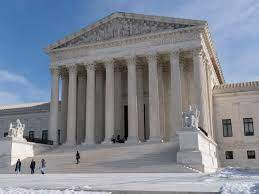
4759 The Supreme Court

  C’mon, guys, we all know what you’re doing.  You’re hiding behind nonsense so a black woman is not the next Associate Justice of the  U.S....